Need Mechanical Seal Solutions? Chat with our experts instantly on WhatsApp!
Mechanical Seal Failure in 2026: Causes, Signs & Solutions
Learn why mechanical seals fail in 2026, common warning signs, real causes, and proven solutions to prevent leakage, downtime, and pump damage.
MECHANICAL SEAL
Sandy
9/8/20254 min read
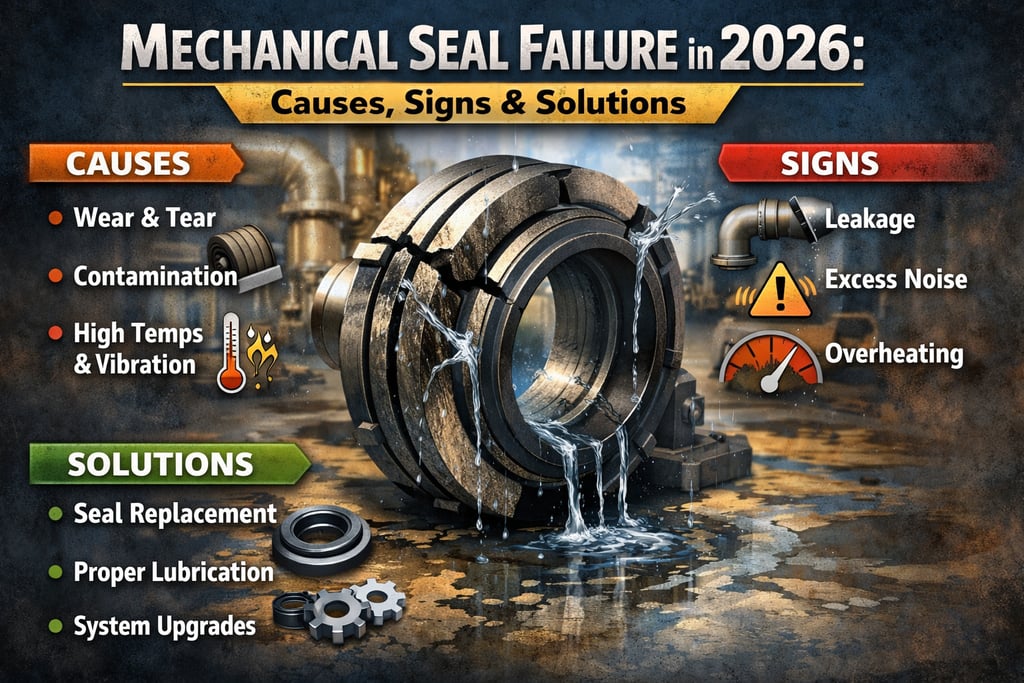
Mechanical seal failure is one of those problems that never announces itself politely. One day the pump is running fine, the next day there’s leakage on the floor, rising temperatures, or a sudden shutdown. In 2026, this issue is showing up more often, not because seals are getting worse, but because operating conditions are getting tougher.
Higher pump speeds, compact designs, aggressive chemicals, and pressure to reduce maintenance costs are all putting seals under stress. If you work with pumps long enough, you already know this truth: Most mechanical seal failures are preventable.
This guide explains why mechanical seals fail in 2026, how to spot problems early, and what actually works to extend seal life in the real world, without complicated theory.
What Does Mechanical Seal Failure Really Mean?
Mechanical seal failure means the seal can no longer do its main job:
Keep the fluid inside the pump and off your shop floor.
Failure can happen in two ways:
Sudden failure, where the seal breaks or burns, and leakage is immediate
Slow failure, where small drips turn into regular maintenance headaches
Both situations cost time, money, and sometimes safety.
Why Mechanical Seal Failures Are Increasing in 2026 ?
Let’s be honest, pumps today are being pushed harder than ever before.
Here’s what’s changed:
Pumps run at higher speeds
Fluids are more corrosive and abrasive
Equipment is lighter and less forgiving
Maintenance teams are smaller
Shutdowns are more expensive than ever
All of this means less margin for error. Even small mistakes now lead to big failures.
The Most Common Reasons Mechanical Seals Fail in 2026
1. Dry Running ( Still the Biggest Seal Killer
Dry running is responsible for more seal failures than any other cause, and it usually happens within seconds.
Why it happens
Pump not properly primed
Air trapped in the suction line
Low liquid level
Blocked or partially closed suction valve
What does it do to the seal?
Mechanical seal faces depend on a thin liquid film for cooling and lubrication. When that liquid disappears:
Heat builds instantly
Faces crack or blister
The seal fails fast
Simple ways to prevent it
Always prime the pump before startup
Install dry-run protection sensors
Make sure suction lines are clear
Choose seal materials that tolerate short dry-running events
2. Wrong Mechanical Seal Selection
A seal can be brand new and still fail early if it’s not designed for the job.
Common mistakes
Using standard seals for chemical applications
Ignoring pressure or temperature limits
Using single seals where double seals are needed
Overlooking shaft speed
Why does this cause failure?
The seal is constantly operating outside its comfort zone. Over time, materials degrade, faces wear unevenly, and leakage begins.
What works better
Match the seal to the fluid, temperature, pressure, and speed
Use cartridge mechanical seals to reduce setup errors
Upgrade to double mechanical seals for hazardous or volatile fluids
3. Poor Installation (Even Good Seals Can Fail Fast)
You can buy the best seal in the world and still ruin it during installation.
Typical installation problems
Incorrect axial setting
Dirty hands or tools
Over-tightened screws
Shaft runout not checked
Why this matters
Mechanical seals operate with extremely tight tolerances. A small mistake during installation often leads to:
Uneven face contact
Excessive heat
Early leakage
Better approach
Follow the manufacturer instructions carefully
Keep the installation area clean
Use torque tools
Choose cartridge seals whenever possible
4. Shaft Misalignment and Vibration
Modern pumps don’t tolerate misalignment the way older designs did.
Where vibration comes from
Poor coupling alignment
Bent shafts
Worn bearings
Weak foundations
How it damages seals
Seal faces wear unevenly
Elastomers get pushed out of position
Cracks develop in hard faces
What helps
Laser shaft alignment
Regular vibration monitoring
Bearing inspection and replacement
Solid baseplate installation
5. Chemical Damage to Seal Materials
Chemicals don’t just attack metals—they quietly destroy elastomers too.
Common signs
Swollen O-rings
Brittle bellows
Sudden leakage after a short service period
Why it happens
The seal materials were never meant to handle that specific chemical.
Smart material choices
EPDM for water and steam
FKM / FFKM for aggressive chemicals
Silicon carbide faces for corrosive or abrasive services
Always check chemical compatibility before choosing a seal.
6. Abrasive Particles in the Fluid
If the pumped fluid contains solids, the seal faces are constantly under attack.
Industries that see this often
Mining
Wastewater treatment
Cement and slurry handling
Pulp and paper
What abrasives do
They scratch seal faces, destroy the sealing film, and speed up wear.
Practical solutions
Use SiC vs SiC face combinations
Install proper flush plans (API Plan 32 or 62)
Improve filtration where possible
7. Heat B-related Problems and Thermal Shock
Sudden temperature changes are another quiet seal killer.
Typical causes
Rapid startup and shutdown
Inadequate cooling or flushing
Running pumps beyond design limits
Result
Seal faces crack due to thermal stress, leading to leakage.
Prevention
Use proper cooling and flush systems
Avoid rapid temperature changes
Monitor seal chamber temperature
Early Warning Signs You Shouldn’t Ignore
Mechanical seals rarely fail without giving warnings first.
Watch for:
Small but consistent leakage
Rising power consumption
Unusual noise or vibration
Hot seal chamber
Frequent seal replacements
Catching these signs early can save the pump—and your budget.
What Actually Works to Prevent Seal Failure in 2026?
Upgrade to Cartridge Mechanical Seals
They’re easier to install, more reliable, and reduce human error.
Use Predictive Maintenance
Vibration analysis, thermal monitoring, and smart sensors are becoming standard—and they work.
Don’t Compromise on Seal Quality
Cheap seals usually cost more in downtime and repairs.
Train Your Maintenance Team
Well-trained technicians prevent most premature seal failures without adding new equipment.
The Real Cost of Mechanical Seal Failure
Seal failure isn’t just about replacing a part. It includes:
Lost production time
Labor and emergency repairs
Damage to pump components
Environmental and safety risks
Preventive action is always cheaper than reactive repair.
Final Thoughts
Mechanical seal failure in 2026 isn’t a mystery. It’s usually the result of dry running, wrong selection, poor installation, vibration, or chemical incompatibility. The good news? Most of these issues are easy to prevent with the right approach.
If you treat mechanical seals as critical components, not just consumables, you’ll see:
Longer seal life
Fewer breakdowns
More reliable pump performance